The first train arrives in Vancouver - 1887
Use this handy “cheat sheet” to help you answer the history questions for the Celebrate and Explore Vancouver Contest and learn more about Vancouver’s port and railway past.
1792: Captain George Vancouver is the first European to enter Burrard Inlet and recognize Vancouver as an ideal trading region.
1864: The first export cargo of lumber sails to Australia on the Ellen Lewis.
1867: British Columbia faced a decision: to remain a British Colony, Annex with the U.S., or join the newly formed Dominion of Canada.
1871: On July 20, British Columbia became the sixth province to join Canada. In return for entering Confederation, Canada promised to build a transcontinental railway from Montreal to the Pacific coast within 10 years.
1885: On November 5, the “Last Spike” was driven on Canadian Pacific’s main line at Cragigellachie and Canada fulfilled its promise to British Columbia.
1886: On July 4, the first transcontinental train arrived in Port Moody, BC - Canada’s western most terminus.
1886: Vancouver was renamed from “Granville City”. William Cornelius Van Horne, President of CPR, chose the name “Vancouver” to put what “is destined to be a great city” on the map. The city is named after the well-known 18th-century Pacific coast explorer, Captain George Vancouver.
"A letter from the postmaster general A. Campbell to CP President William Van Horne regarding the name of "Vancouver City" - January 9, 1886" to the picture of the letter.
1886: The City of Vancouver was incorporated following its selection as the railhead for the Canadian Pacific Railway. The railway introduced the new city as Canada’s gateway to the Pacific.
1887: By 1887, CPR line was extended 20 kilometers further west along Burrard Inlet to the city of Vancouver to take advantage of its large natural seaport, commerce, and industry that would better accommodate the railway’s anticipated growth.
1887: On May 23, the first transcontinental train to Vancouver rolled in to town. Pulled by locomotive 374 and decorated with flags and a banner that declared “From Ocean to Ocean – Our National Highway” the passengers were warmly greeted with cheers and speeches.
1887: CPR fulfilled its promise to construct a hotel in the heart of the new City of Vancouver when Hotel Vancouver opened its doors.
1889: July, CPR captured Pacific mail contract with Canada and the United Kingdom in July 1889 and then ordered the first of its “Empress” steamships to be built, sealing Vancouver’s importance as a maritime hub.
1891: CPR fulfilled its promise to construct an opera house in the heart of the new City of Vancouver when the curtains rose at the Vancouver Opera House.
1891: The Empress of India arrives on her maiden voyage for Canadian Pacific.
1912: CPR expanded and built new freight yards and facilities capable of handling 5,000 cars in Coquitlam.
1914: Waterfront Station was constructed to accommodate growing numbers of West Coast passengers. Development of the Shaughnessy Heights district began. It was named after CPR’s third president, Thomas G. Shaughnessy, and its streets have names of CPR directors and senior officers such as Olser, Angus and Marpole.
1923: Ballantyne Pier opens and establishes a new era for passenger travel.
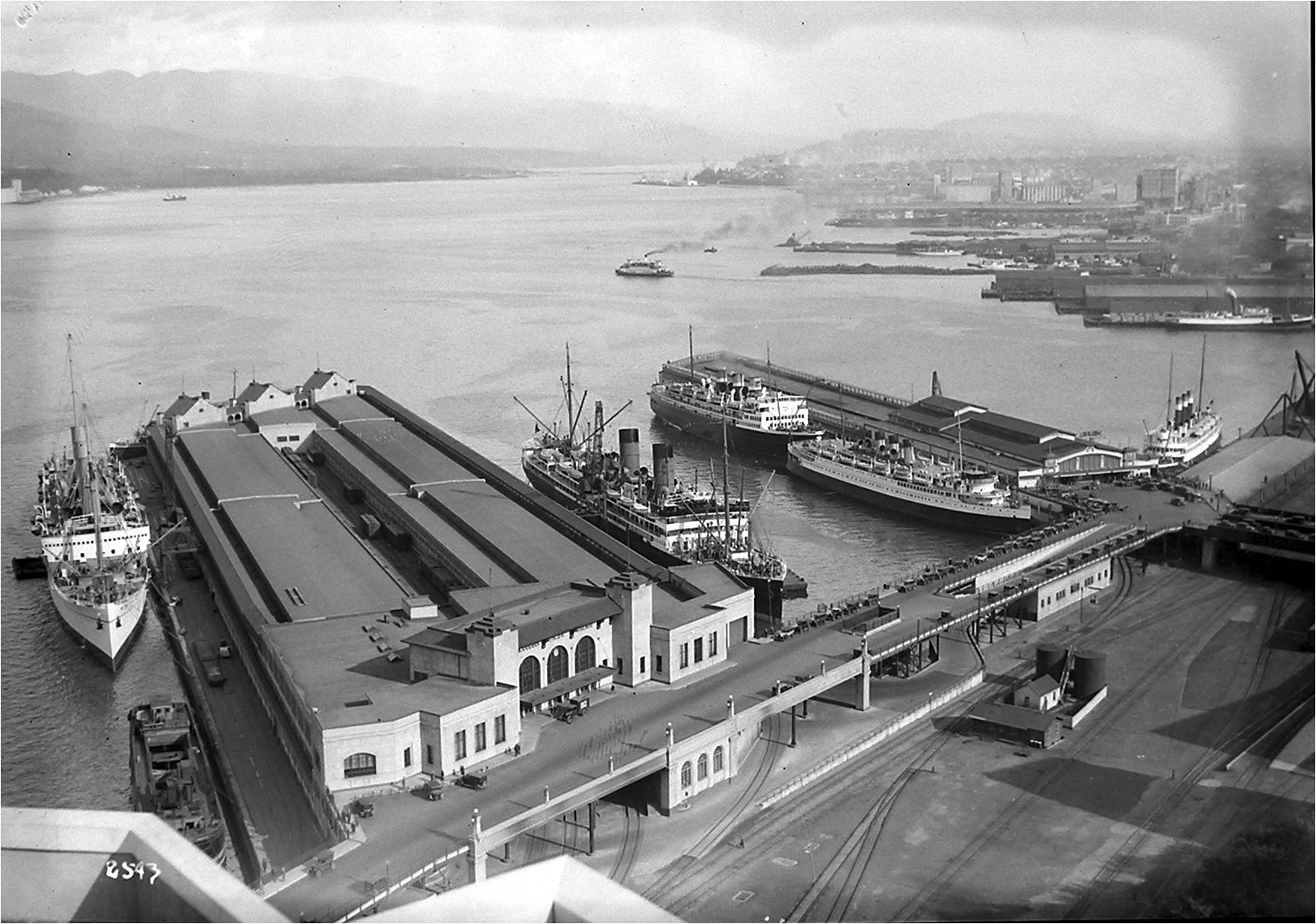
1927: Canadian Pacific’s Pier B-C opens. The enormous Pier B-C complex accommodated passenger and freight connecting between trains, Coastal ships, and Empress ships. Port Metro Vancouver’s offices are currently located on the original pilings of Pier B-C.
A 13-car CP silk train picks up speed as it leaves Vancouver for Eastern fashion centres in 1928. Canadian Pacific Railway Archives photo.
1944: I.L.W.U certified as the longshoring union on the waterfront.
1950: Canadian Pacific located its fast-growing intermodal services at False Creek, but as he area grew and shifted from industrial to urban-residential use and the trend prompted the company to transfer operations out of the city.
1955: The first shipment on the world’s first container ship, the Clifford J. Rogers, leaves the Port for Alaska.
1970: Coal facility, Westshore Terminals opens at Roberts Bank. Canadian Pacific was the first railway to begin operating unit trains loaded with coal destined for Japan’s metallurgical furnaces
1975: The Port’s first container terminals, Vanterm and Lynnterm become operational.
1980s: Canadian Pacific sold its 170-acre False Creek property to make way for Expo 86.
1986: Canada Place opens for Expo ’86, placing Vancouver on the map as a popular tourist destination.
Canada Place cruise ship terminal - 1986
1997: Deltaport container terminal opens at Roberts Bank to meet increased demand for Canadian trade through the west coast of Canada.
2009: Port Metro Vancouver becomes the first port in Canada to implement shore power for cruise ships, reducing emissions by allowing ships to turn off their engines and connect to electrical power while docked.
2010: It is with pride that CP continued its long association with Vancouver and British as the Official Rail Freight Services Provider for the Vancouver 2010 Olympic and Paralympic Games. Sponsorship included moving goods and spirit across the nation and the world. A world class container terminal that opened a third berth in January 2010, increasing the terminal’s capacity by 50% and further extending Canadian Pacific’s link with Pacific Rim countries.
2010: Port Metro Vancouver and Global Container Terminals open the new $400 million third berth at Deltaport container terminal, providing a 50 per cent increase in container capacity.
Today:
CP’s historical connection to the city of Vancouver, the port, and its enterprise, remains very much in tact today. CP remains very much a key player at Canada’s largest port, standing as a linchpin in the nation’s economy through maintaining, operating, and rail line to ship customers’ grain, metal, minerals, fertilizer, forest products and intermodal containers across Canada and beyond. To learn more about CP’s rich history, visit: Canadian Pacific.
Port Metro Vancouver is the largest and busiest port in Canada, trading $75 billion in goods with more than 160 trading economies each year. The Port is also committed to supporting the social and environmental aspirations of the communities it serves. To learn more about Port Metro Vancouver’s rich history, visit Port Metro Vancouver.